
Genoa Township City Directory Shelf
The firmest starting point is not a modern Genoa-only volume. It is John W. Keating's Livingston County Directory for the Years 1873-4, a countywide work held by the Library of Michigan on microfiche under call number 2S LH4971. Its catalog description names residents, business houses, officials, and churches. That county setting matters. Genoa Township families may appear through a post office, a farm, or a wider Livingston County reference rather than through a present-day street label. The collection is useful precisely because it records the local naming system of its time.
| Collections | Years | Where Held | Access |
|---|---|---|---|
| Livingston County Directory, John W. Keating | 1873-74 | Library of Michigan microfiche, 2S LH4971 | Cataloged local-history research |
| Livingston historical and combined atlases | 1875, 1895, 1915 editions cited | Library of Michigan and area collections | Landowner, plat, farm, and place-name context |
| Standard Atlas of Livingston County | 1895 | Library of Congress digitized reference | Public online scan with plat, farmer, business, and landowner context |
| Howell directories and telephone books | Exact runs not published | Howell Carnegie Archives | Appointment-based shelf and staff verification |
| Brighton local directory material | Exact runs not published | Brighton Room and local library resources | Ask staff or search the catalog before assuming coverage |
No authoritative online catalog found an exact Polk run for Genoa, Howell, or Brighton. That absence is important. A directory title in an archive description confirms a collection lead, not a complete series, a publisher, or a reverse-address section. The Library of Michigan Livingston County guide is the strongest published path for the 1873-74 directory and related county works.
Genoa Township City Directory Desk
Howell Carnegie Library Archives is the nearby working desk for historical directories, telephone books, township records, cemetery records, plat maps, and Howell High School yearbooks. Archive access requires an appointment and a Researcher Registration Form. The collection describes about 1,000 alphabetically filed subject boxes, so a search can start with a surname but should also try Genoa Township, a road, a farm, a cemetery, a business, or an institution. Microfilm in the Reference Local History Room supports newspapers and other local publications during regular library hours, while archival boxes remain appointment-controlled.
The archive's original property abstracts add a useful bridge when archive volumes give only a name, post office, or road. They can preserve prior owners, legal descriptions, transfers, and abstract references when a recorded-deed search is incomplete. For Genoa Township research, write down every form of the location that appears in a source. The current street address may be the least helpful term for an early farm or rural property.
See the Howell Carnegie Library Archives research interface before arranging an appointment.
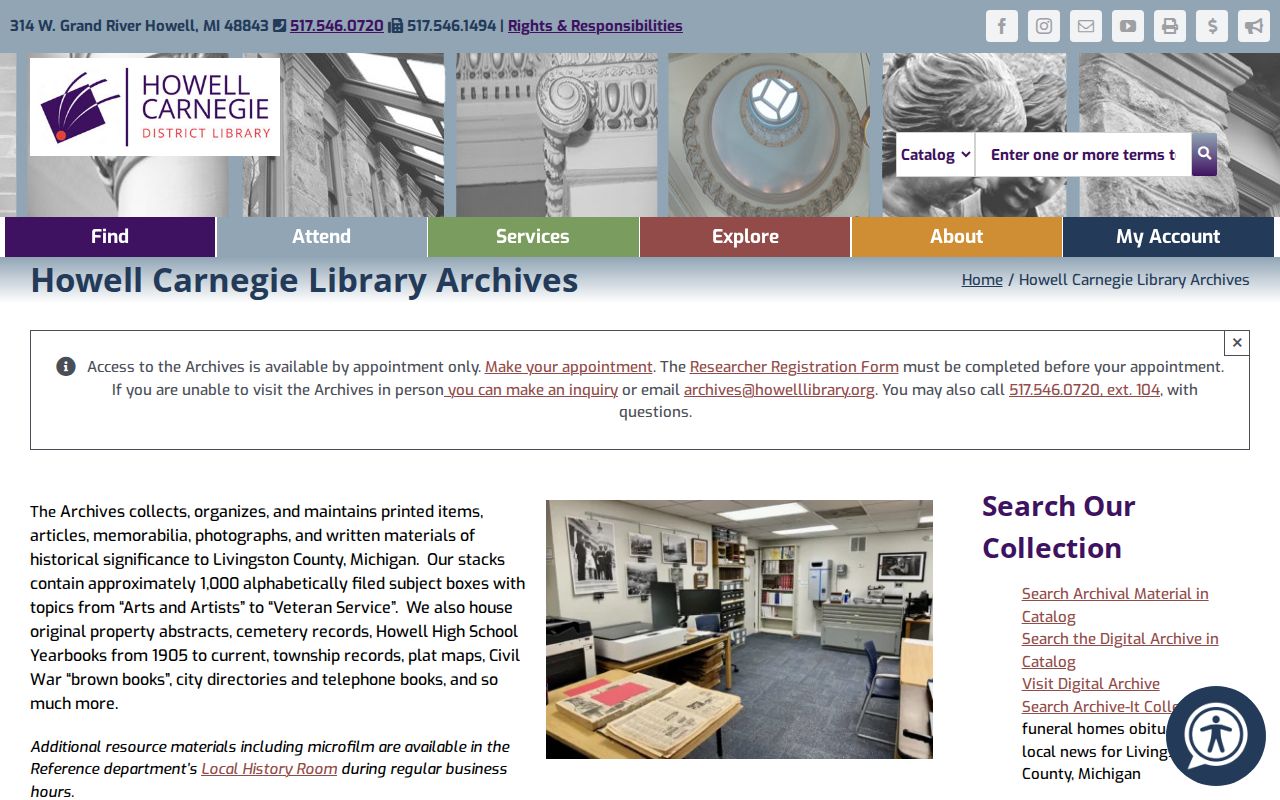
The archive is a practical place to connect a directory clue to property abstracts, subject files, maps, and local publications rather than treating one listing as a complete family record.
Insider tip. Search the Howell Archives by surname, township, road, farm, cemetery, and institution, not only by a present-day address.
Genoa Township City Directory Atlas Clues
Maps can supply the place key that a historical listing lacks. The 1895 Standard Atlas of Livingston County, published by Geo. A. Ogle & Co., gives a public digital reference for plats, farmers, businesses, and landowners. The 1875, 1895, and 1915 atlas references are especially useful when a Genoa Township person was identified by a farm, section, lot, or road rather than by a numbered address. Read a map entry with its page and index context. A landowner name is evidence about land, not proof that every household member lived there.
Use an atlas and a directory as paired sources. A surname found in the 1873-74 county directory can be checked against a plat, then compared with a census township and a later deed trail. This approach also reduces the risk of mixing families who shared a common name. The rural history of Genoa Township makes legal descriptions, township sections, and older place names part of ordinary directory work.
Reading a Genoa Township City Directory
A scan or microfiche page must be inspected before claiming that a particular Genoa Township volume uses a spouse notation, a residence abbreviation, or an ownership mark. The public catalog pages expose titles and collection context, not a verified readable entry from the 1873-74 microfiche. Record what appears on the actual page and preserve its page number, section, and any printed legend. The inventory below is a checklist for inspection, not a claim about the format of every local directory.
| Name form | Copy the surname, given name, initials, and spelling exactly; note variants for later searches. |
|---|---|
| Household clue | Record a spouse, relation, widow notation, or shared address only if the inspected entry prints it. |
| Place clue | Capture the road, post office, farm, township, or address as printed, plus page and section. |
| Activity line | Preserve any business or other identifying line verbatim and avoid turning it into a present-day conclusion. |
| Volume key | Photograph or transcribe the abbreviation key and identify whether the item is a directory, telephone book, or atlas. |
- Criss-cross directory
- An address-ordered directory when a volume supplies one. Howell's public holdings description does not verify which years, if any, have this format.
- Householder index
- A name arrangement that helps locate the person or household entry before checking the rest of the volume.
- Abbreviation key
- A printed legend that explains the marks used in that specific volume. Read it before interpreting a short notation.
One entry can point to a later census, deed, obituary, cemetery record, or newspaper item. It cannot by itself prove a move, a death, or a transfer of land.
Genoa Township Directory Year Timeline
The verified sequence is uneven, so it is better to mark what is known than to create a polished but false run. Genoa Township research starts with county and land references, then shifts into archival directories, atlases, yearbooks, newspapers, and federal schedules. Later Howell and Brighton directory or telephone holdings need title-by-title confirmation from the repositories.
- 1873-74: Keating's county directory documents residents, business houses, officials, and churches.
- 1875, 1895, and 1915: Historical atlas editions provide successive land, plat, and place-name context.
- 1895: The Ogle atlas offers digitized farmer, business, landowner, and plat reference material.
- 1905-current: Howell High School yearbooks begin in the Howell Carnegie Archives collection.
- 1950: This is the latest federal census schedule publicly available under the 72-year rule.
Note: The federal 1890 schedule was lost, so the Library of Michigan's 1890 Residents of Livingston County is a separate local compilation, not the missing census.
Genoa Township City Directories and Census
Printed directories and census schedules measure different moments. A directory can reflect information gathered before its publication, while a federal census records a household at its enumeration date. Pair the 1873-74 Livingston County directory with the 1870 and 1880 census years, then extend the trail through the released schedules for 1900, 1910, 1920, 1930, 1940, and 1950. Township, post office, road, age, household members, and name variants help separate same-name families.
- Copy the directory spelling, post office, road, or farm name exactly as printed.
- Check the nearest released census year for a matching township and household pattern.
- Compare the location with a plat or atlas if the directory gives land or farm context.
- Look for later telephone books or directories only after staff confirms that a matching volume exists.
- Use a newspaper, cemetery record, probate file, or recorded deed to explain a disappearance from the trail.
A widow notation, a business listing, or a new post office can explain a changed entry without proving why it changed. The best result is a set of records that agrees on person, place, and time.
Genoa Township Cemetery and Yearbook Leads
Historical directory work gets stronger when it reaches the local-memory collections. The Brighton Room holds Livingston County census material in print and microfilm, accepts obituary requests, and specifically includes Genoa Township in its local-history scope. The Livingston County Historical Society accepts research requests by mail, phone, or email and provides genealogy education. Neither source is a current resident list. Both can help test a historical family connection.
Open the Brighton Room local-history resources when a directory name needs census or obituary follow-up.
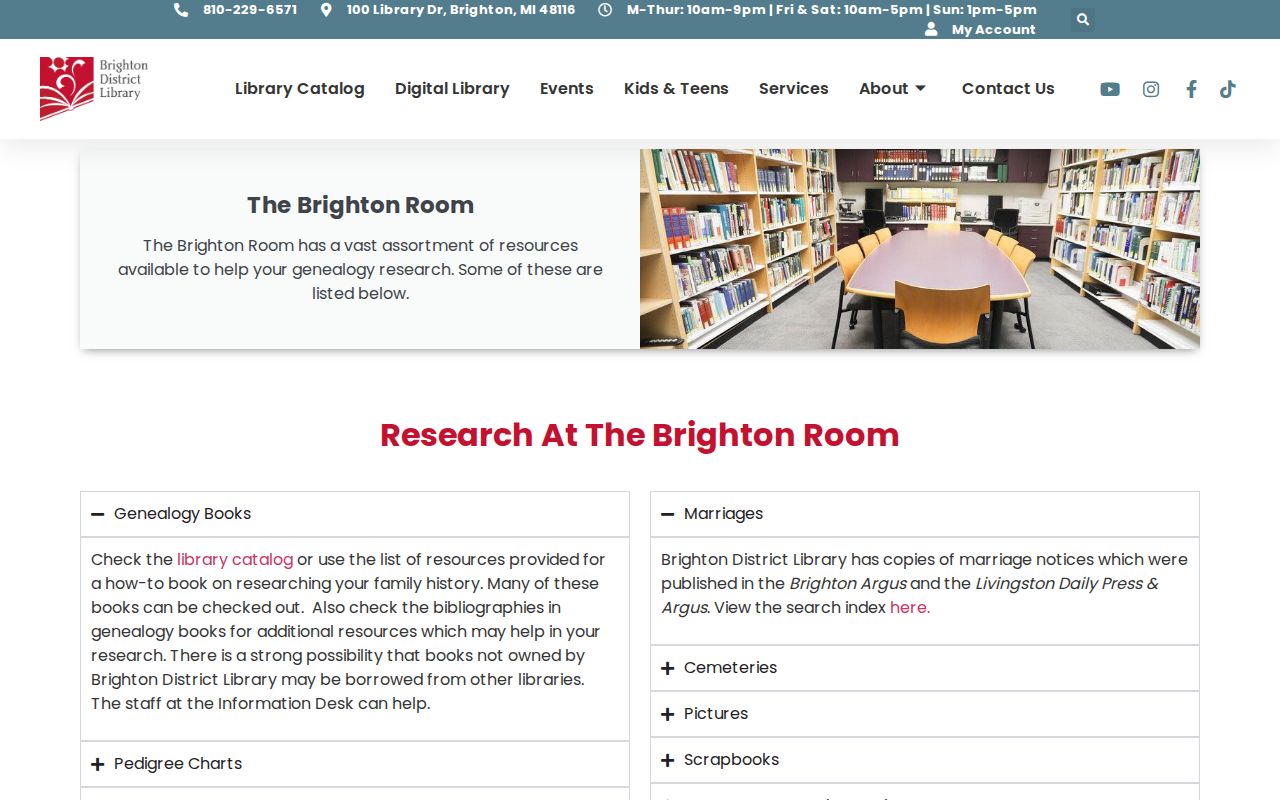
The Brighton collection provides a second local route for a name found in a Genoa Township directory, especially when a county directory used a Brighton or Howell postal context.
The Livingston County Historical Society research resources provide another request-based route for local institution, family, cemetery, and newspaper leads.
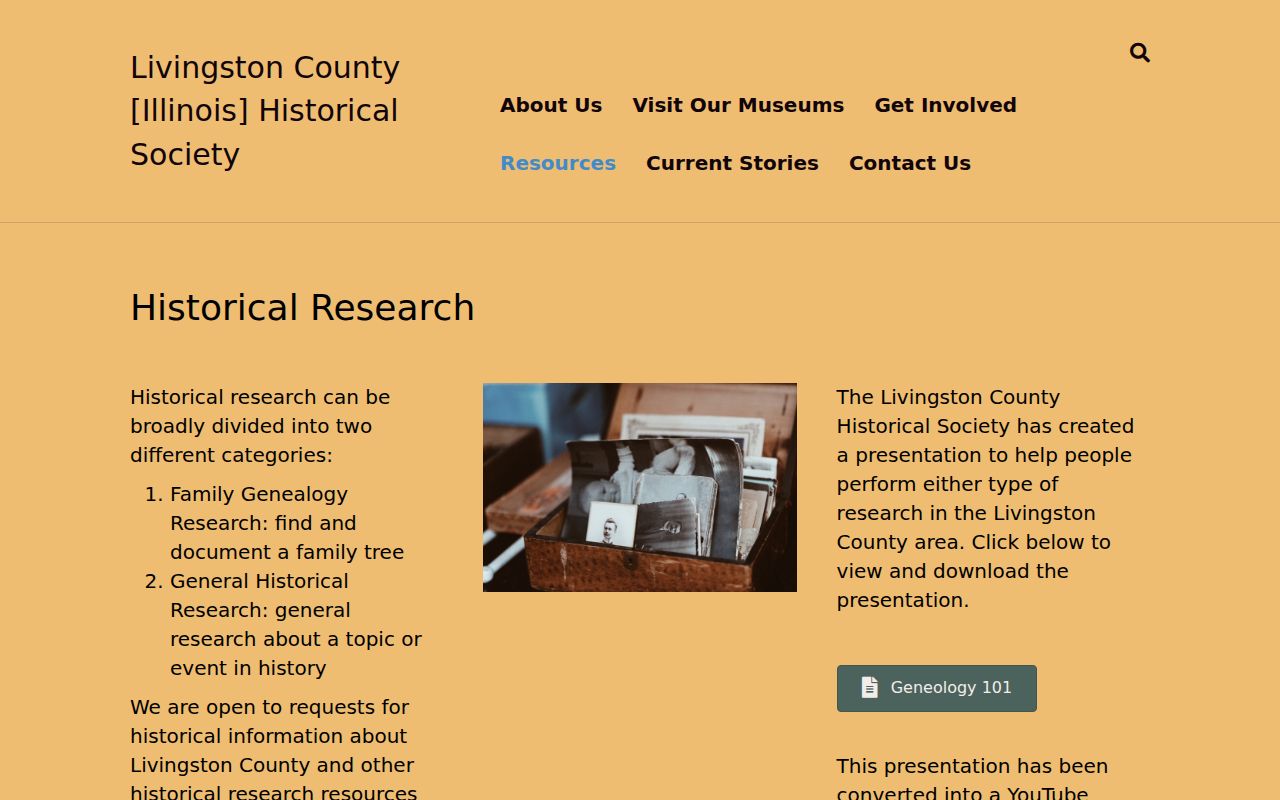
Historical-society assistance can help identify an appropriate source, but it does not remove the need to verify the original record or the exact collection coverage.
Genoa Township Directory Gaps
Historical gaps are part of the record. No official online source verified a complete Genoa, Howell, or Brighton directory sequence, a complete reverse-directory series, or a digitized Genoa household collection. The public description of Howell holdings names historical directories and telephone books without listing titles, publishers, or years. The Brighton Room similarly offers a local-history lead without publishing a complete shelf list. Ask for the catalog record or the volume itself before building a conclusion around a year that has not been verified.
Postal geography can create another false gap. Genoa Township properties often use Brighton 48116, Brighton 48114, or Howell 48843 mailing labels. A catalog or newspaper search may therefore need each postal city, the township name, a road, a farm, a legal description, and surname variants. "Brighton" on a historical item does not by itself place a person in the City of Brighton.
Myth. A catalog note that says "directories" does not establish a full annual run or a reverse-address section; confirm the specific volume first.
When the goal shifts from historical shelves to a modern record check, a Genoa Township resident lookup can help separate an old directory clue from a current public record.